Key Takeaways
- Adopt the Bioharmony trend to synchronize your evening routine with your natural biological rhythms for optimal cognitive recovery.
- Utilize 20 minutes of red light therapy to stimulate cellular energy and accelerate mitochondrial repair before bed.
- Optimize your sleep architecture by consuming estrogen-reducing decaf green tea and setting your cooling mattress to exactly 18 degrees Celsius.
- Elevate your sleep hygiene to ‘high status’ by disabling morning alarms and allowing your body to wake up naturally.
The Dawn of the Bioharmony Era
As we navigate the complexities of 2026, the paradigm of rest has fundamentally shifted. We are no longer merely ‘going to sleep’; we are actively engaging in the Bioharmony trend. As a researcher deeply invested in cognitive neuroscience, I have observed a profound transition from passive rest to engineered biological synchronization. The modern high-status individual understands that sleep is not a luxury, but a precisely tuned mechanism for neuroplasticity, memory consolidation, and psychological resilience. To achieve this state of ultimate well-being, one must curate an evening protocol that signals safety and recovery to the central nervous system.
Photobiomodulation: Priming the Brain and Body
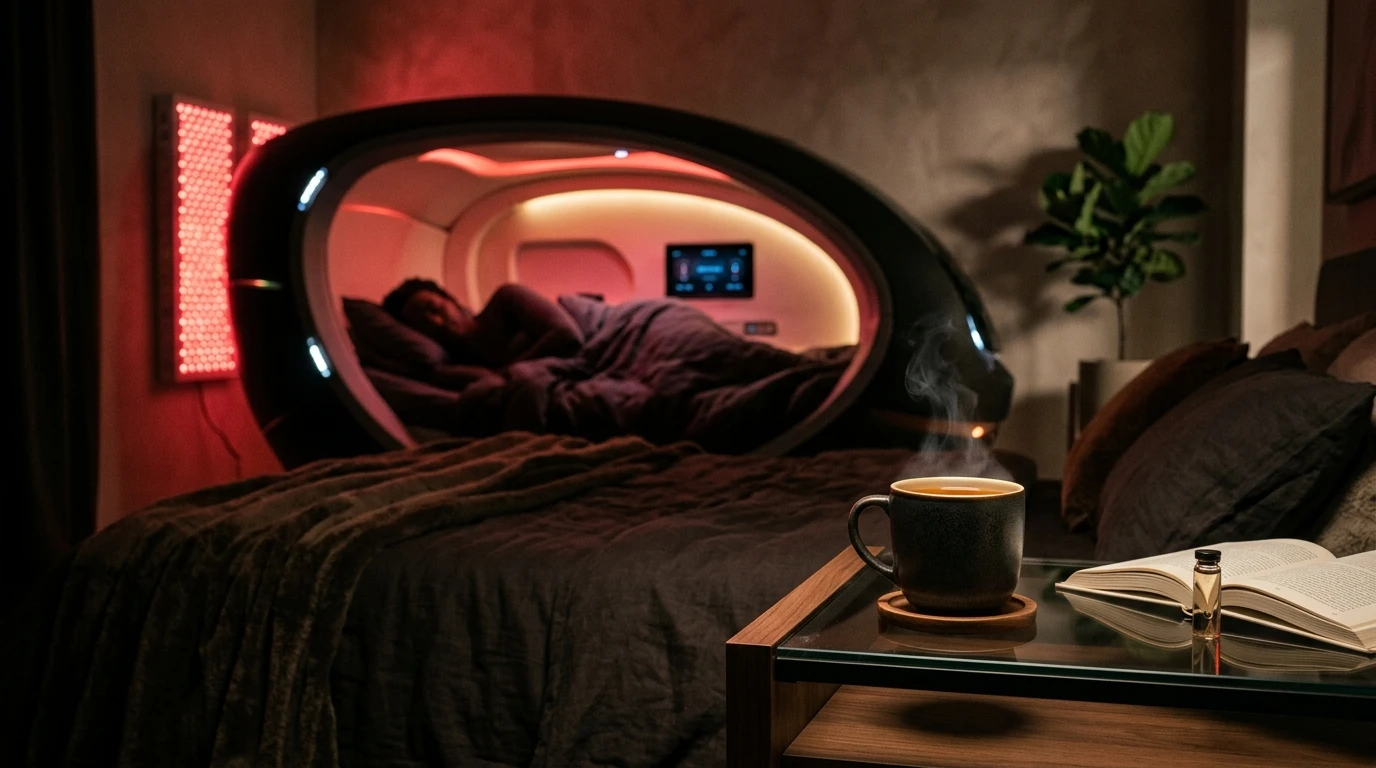
The foundation of the 2026 evening protocol begins well before your head hits the pillow. The first critical step is engaging in precisely 20 minutes of exposure to a Red Light Therapy panel. From a neurobiological standpoint, specific wavelengths of red and near-infrared light penetrate the skin and skull, directly interacting with the mitochondria—the powerhouses of our cells. This process, known as photobiomodulation, boosts the production of adenosine triphosphate, facilitating vital mitochondrial repair.
By dedicating 20 minutes to this practice, you are actively reducing systemic inflammation and lowering evening cortisol levels. This carefully measured light exposure mimics the natural spectrum of a sunset, signaling to the pineal gland that it is time to initiate the robust secretion of melatonin, the hormone responsible for orchestrating sleep architecture.
Nutritional Down-Regulation
The Role of Decaf Green Tea
Following cellular repair, the next phase involves nutritional down-regulation. The current protocol advocates for a carefully brewed cup of estrogen-reducing decaf green tea. The catechins and L-theanine present in green tea work synergistically to modulate brain wave activity, promoting an increase in alpha waves which are associated with a state of relaxed alertness.
Furthermore, managing estrogen dominance through specific dietary compounds has become a focal point in maintaining hormonal equilibrium for both men and women. By ensuring the tea is entirely decaffeinated, we protect the adenosine receptors in the brain, ensuring that the natural pressure to sleep continues to build uninterrupted.
The Environmental Architecture of True Rest
Human evolution dictates that our most restorative sleep occurs in environments that are cold and completely devoid of light. In 2026, we do not leave this to chance; we engineer it. Your bedroom must be optimized for true darkness. This means eliminating all ambient light pollution—no glowing LEDs, no streetlights filtering through thin curtains. True darkness prevents the disruption of your circadian rhythm and maximizes deep sleep phases.
Equally critical is thermoregulation. The protocol demands a cooling mattress meticulously set to 18 degrees Celsius. Scientific consensus shows that a slight drop in core body temperature is essential to initiate sleep and maintain the highly restorative slow-wave sleep stages. At exactly 18 degrees Celsius, the brain is liberated from the metabolic burden of thermoregulation, allowing it to dedicate all available resources to cellular cleanup and memory consolidation.
The Ultimate High Status Flex: The Natural Awakening
Perhaps the most revolutionary aspect of the 2026 protocol is the new golden rule of sleep hygiene: the complete abandonment of the morning alarm clock. For decades, society has relied on jarring auditory stimuli to tear the brain out of its sleep cycles. This artificial awakening triggers an acute stress response, flooding the brain with cortisol and adrenaline, which fractures cognitive performance for hours.
Disabling your alarms is the ultimate marker of ‘high status’ sleep hygiene. It signifies that your life is structured around your biology, rather than your biology being forced to conform to external demands. By allowing your body to wake up naturally, you ensure that the brain completes its final REM cycle. This results in unparalleled mental clarity, robust emotional regulation, and a mind that is fully primed to tackle the cognitive demands of the day.